
Check Whether Your Match Has English Sales
Here’s the first thing to know about j league tickets english: no single English portal covers every match. Official English ticketing exists for many J1, J2 and J3 fixtures, but not all of them, so your first job is working out how your specific match is sold. Navitime’s guide to buying sports tickets in Japan says English sales are common but uneven across clubs, and the complete guide for foreigners to J.League tickets makes the same point.
Start from the club, not the league. Each club runs its own sales, sets its own prices and picks its own sellers. Some use a major ticketing platform; others sell directly. Kawasaki Frontale, for example, sells through its own site rather than Ticket Pia, according to a tourist guide to J.League tickets. So the quickest check, when you’re hunting for j league tickets english, is to open the home club’s official website, look for an English or "International" menu, and find the ticket page for your date.
I can’t give you a verified club-by-club list of which teams offer j league tickets english, and I can’t confirm 2026 on-sale dates here. Check the club and J.League sites directly before you plan around a fixture. On budget, the guides suggest roughly 2,000–3,000 yen for unreserved seats and about 4,000–7,000 yen for reserved seats, with each club setting its own prices. Treat that as a rough range, not a quote.
Step-by-Step: Buying J League Tickets Online
Once you know your match is sold online, the process is fairly consistent even though the websites differ. Most buyers follow this sequence.
- Find the match and the seating categories. On the club site, pick your fixture and look at the stand options. Unreserved (free-seating) areas cost less, while reserved seats let you choose a block in advance.
- Check the sales window. Some matches open weeks ahead. Popular fixtures can sell out well before ordinary league games do.
- Create an account if required. This is where many visitors get stuck. Japanese domestic ticketing accounts commonly require SMS verification from a Japanese mobile number, which short-term visitors may not have, as Navitime notes. If a platform insists on a Japanese number, look for a guest checkout or an English-language alternative on the club’s own site.
- Choose your payment method. Foreign-card acceptance varies by platform and by event. One guide rates e+, Pia and Lawson differently, while another rates them all as good, so don’t assume your card will work everywhere. Keep a backup, such as paying at a convenience store.
- Pick a delivery method. Common options are a QR code on your phone or collection at a convenience store. Choose whichever you can realistically use on match day.
- Save your confirmation. Screenshot the confirmation page and any reference number. You may need them at the box office or a store terminal.
If a step fails because of a Japanese-only form, a rejected card or a phone-number check, stop there and look at another route. Retrying rarely helps.
Day-of Box Office and Convenience-Store Options
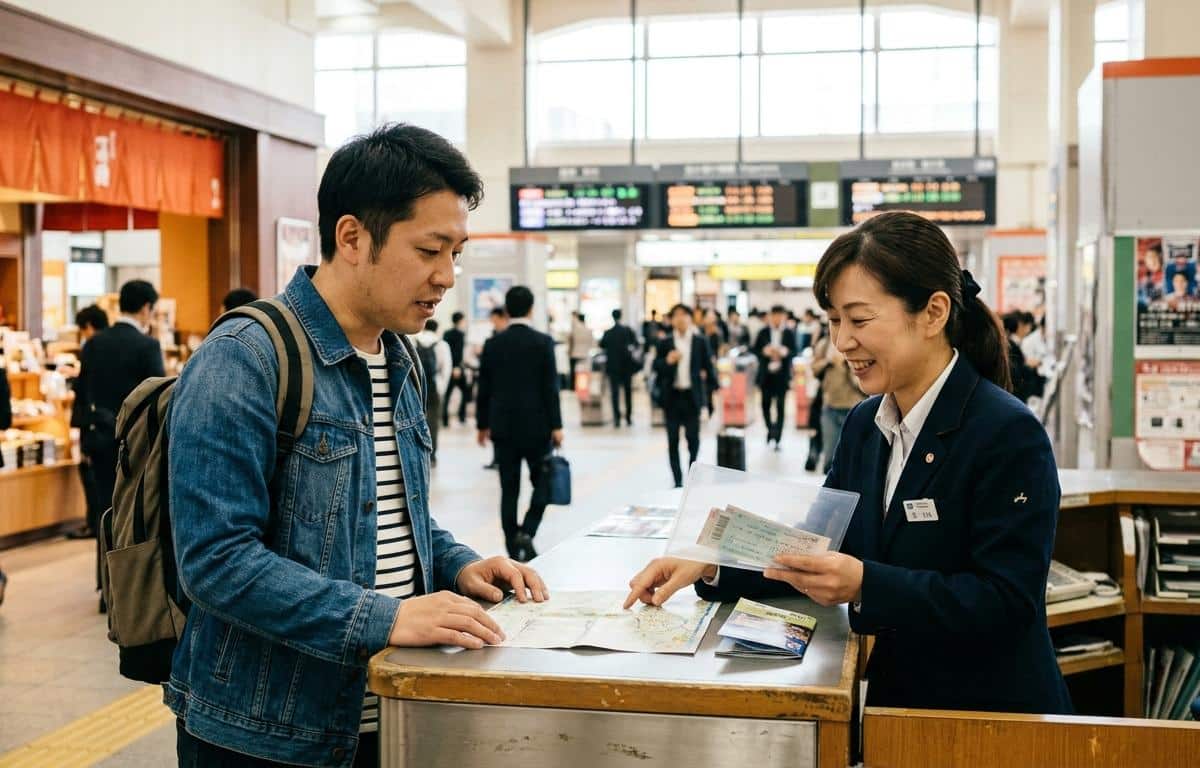
If online purchasing doesn’t work out, you have a good fallback. Ordinary league matches usually have day-of tickets at the stadium box office, according to the tourist guide to J.League tickets. That makes a casual trip to a regular J1, J2 or J3 game much easier than a headline fixture, because you can often turn up, pay and walk in.
A few practical points for the box office:
- Arrive early. Queues build in the hour or two before kickoff, and the seating category you want may be limited by then.
- Bring cash and a card. Not every counter accepts every foreign card, so yen in cash is the safest bet.
- Know your preference. Saying whether you want an unreserved or reserved seat, and roughly how many people are in your group, speeds things up. Pointing to the seating map on your phone works well if language is a barrier.
- Expect limits for big matches. Derbies, rivalry games and fixtures with star players can sell out in advance, leaving nothing at the window.
Convenience stores are the other big option. Terminals such as Lawson’s Loppi and FamilyMart’s FamiPort let you search for events and print an application slip, which you take to the cashier and pay, typically within a short time limit. These machines lean heavily Japanese, though some offer an English screen. If you plan to use one, go with time to spare so a first-time attempt isn’t squeezed in right before kickoff. Whether a given match is even available through a store terminal depends on the club’s chosen seller, so confirm that on the club site first.
Avoiding Unofficial Sellers and Resale Risks
Scams and risky resale are the main downside of hunting for tickets in English, especially for sold-out matches. The core advice: buy from sellers the club itself lists. One guide quoting a club warning notes that tickets bought from unlisted sellers may be resold illegally and could result in denied entry. That example comes from baseball rather than football, but the same caution applies to J.League.
A short checklist for spotting trouble:
- The seller isn’t named on the club’s official ticket page.
- The price sits well above the printed face value.
- You’re asked to pay by bank transfer to a personal account or through an untraceable method.
- The listing has no clear seat, block or entry information.
- The seller can’t explain how the ticket will reach you.
Japan also regulates ticket scalping, and many tickets are now tied to the buyer’s name, so a ticket from a stranger can be refused at the gate even if it looks genuine. I’m not aware of a verified source on how strictly J.League gates check ID, so don’t assume you’ll be waved through with someone else’s name on the ticket. If a match matters to you, protect yourself by using an official seller or a service that handles the purchase transparently. Our guide on how to buy concert tickets in Japan as a foreigner covers the same name-matching and ID-check issues, which are worth understanding before any live event.
Collecting and Using Your Ticket at the Stadium
How you get into the stadium depends on the delivery method you chose. Digital tickets arrive as a QR code, so charge your phone, turn the screen brightness up, and keep the code saved or screenshotted in case the signal is weak around a busy stadium. Paper tickets collected at a convenience store should stay flat and undamaged, since barcode readers can reject creased or smudged ones.
Leave yourself some margin. Gates usually open well before kickoff, and your entrance is often tied to your seating area, so look for a gate or block number on the ticket. Unreserved supporters’ sections frequently have their own entrances, and heading to the wrong side of a large stadium can cost you a surprising amount of time. If your ticket shows a name or a note about identity confirmation, bring your passport to be safe.
Inside, club rules differ. Bag-size limits, rules on bringing in drinks, and restrictions on flags or banners vary by stadium, so check the club’s visitor information on the day. Home and away supporters are normally separated, so buy for the section on the side you want to sit with. Keep your ticket handy after you enter, because you may need it again if you step out or move between areas.
How Jasumo Helps With J League Tickets
If the steps above feel like a lot, that’s exactly the gap we try to fill. At Jasumo Events we run an English-language marketplace for j league tickets english and other live events in Japan, aimed at visitors and expats who get blocked by Japanese-only sites, SMS verification or foreign-card problems. We don’t sell tickets directly ourselves: we purchase on your behalf, verify the tickets before delivery, and offer multilingual support and flexible delivery options.
We can’t promise availability for any particular match or seat, since that depends on the club and the sales window, but we can take the awkward parts off your plate. You can browse our sports events to see what’s currently listed, and read more about how we work if you’d like to know who’s behind the service. If you’re planning to see sumo as well as football on the same trip, our sumo tickets guide and our walkthrough on Ryogoku Kokugikan tickets cover that side of things.
For a regular league match, the box office is often all you need when you’re after j league tickets english. For a sold-out fixture or a language barrier you can’t get past, having someone handle the purchase can save you stress. Whichever route you choose, confirm the match, check how it’s sold, and keep your ticket safe until you’re through the gate.

